
Water softener upkeep might sound like another chore on the homeowner’s list, but it’s actually one of the easiest systems to maintain, and neglecting it costs you hundreds in repairs or premature replacement. A standard water softener works quietly, removing the calcium and magnesium that clog pipes and damage appliances. The catch? It needs regular attention. Unlike a furnace that runs for years without input, a water softener relies on salt, regular cleaning, and a little monitoring to stay efficient. The good news: most maintenance takes minutes and requires no special tools. This guide walks you through salt checks, brine tank cleaning, regeneration cycles, and troubleshooting so your system keeps delivering soft water without the headaches.
Table of Contents
ToggleKey Takeaways
- Regular water softener upkeep—including monthly salt checks and periodic brine tank cleaning—prevents costly repairs and extends system life to 15–20 years.
- Keep the brine tank between one-quarter and one-half full using only high-purity salt pellets to avoid salt bridging and mushing, which reduce softening efficiency.
- Check salt levels every 4–6 weeks and refill when levels drop below the halfway mark, with more frequent checks during winter or in larger households.
- Address common issues like salt bridging and mushing promptly using simple tools like a broom handle, and use resin cleaner in high-iron areas to protect resin beads.
- Clean your brine tank every 1–3 years (annually in hard-water or humid climates) by removing sludge and mineral buildup with mild soap and a soft brush.
- Test water hardness annually with an inexpensive kit and adjust regeneration settings based on results, while considering a pre-filter in areas with high iron or manganese content.
Understanding Your Water Softener System
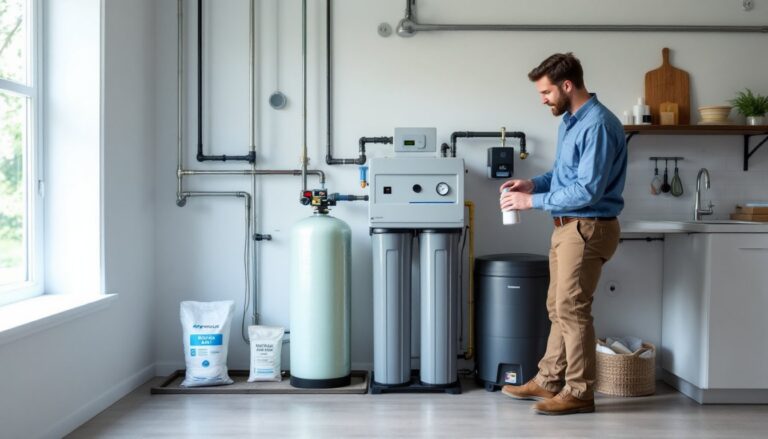
Before jumping into maintenance, it helps to know what you’re dealing with. A standard ion-exchange water softener has three key parts working together. The mineral (resin) tank holds thousands of tiny resin beads that swap out hardness minerals, calcium and magnesium, for sodium ions. The brine tank sits beside it and holds salt mixed with water: this brine solution is what recharges the resin beads. The control valve manages the flow of water through the system and triggers regeneration cycles (the process of cleaning and recharging the resin). Most residential units sit in the basement or utility room, quietly handling hard water before it reaches your pipes and appliances. Knowing this layout helps you spot problems faster and understand why maintenance matters. When salt levels drop or the brine tank gets sludgy, the resin can’t regenerate properly, and your water softens less effectively.
Regular Salt And Resin Tank Maintenance
The brine tank is where most water softener upkeep happens. Use high-purity salt pellets (not rock salt or tablets with anti-caking agents) to reduce sludge buildup and salt bridging, a hard crust that forms when moisture escapes. Keep salt levels between one-quarter and one-half full: overfilling invites mushing and bridging problems. Check your brine tank every 4–6 weeks to catch issues early. Many systems need a salt refill every 2–4 months depending on water hardness, household size, and system age. Refill when salt drops below the halfway mark or when you see more water than salt in the tank.
The resin tank requires less frequent attention but shouldn’t be ignored. If your water has iron, manganese, or organic matter, run a resin cleaner every few months, add cleaner to the brine well and run a manual regeneration according to your manufacturer’s instructions. Resin beads typically last 10–15 years, so you won’t replace them often, but proper cleaning extends their life significantly.
How Often To Check And Refill Salt
Monthly checks are the bare minimum: every 4–6 weeks is more realistic for most households. Set a phone reminder or mark your calendar on the first of the month. During colder months or if you have a larger family, check even more frequently, water softeners work harder in winter and with higher demand. When refilling, pour salt slowly and keep the tank free of debris. If you live in an area with especially hard water or high iron content, consider installing a pre-filter to protect your resin beads and extend system life.
Cleaning And Regeneration Cycles
Your water softener regenerates on a schedule (typically every 4–7 days on a properly sized system), flushing mineral-laden resin with brine to restore its softening power. You don’t need to do anything during regeneration, but you may notice slightly discolored water or a reduction in water pressure for a couple of hours, that’s normal.
Brine tank cleaning is more hands-on. Plan to clean it every 1–3 years, or annually if you’re in a hard-water or humid area. Here’s the process: First, turn the system to bypass or off mode. Empty the salt and brine water, use a small bucket or submersible pump. Scrub the interior with mild dish soap and a soft brush to remove sludge and mineral buildup. Rinse thoroughly with clean water until no soap residue remains. Refill with fresh, high-purity salt pellets and allow the system to rebuild brine before restarting. If you see black specks in the water after refilling, it’s likely resin dust: run a manual backwash or regeneration to flush it out.
For resin cleaning in high-iron or organic-matter areas, use a water softener cleaner product designed for the task. Follow manufacturer instructions exactly, as procedures vary by system model. Most involve adding cleaner to the brine well and triggering a manual regeneration cycle.
Troubleshooting Common Water Softener Problems
Not all problems require a technician. Salt bridging is the most common issue, a hard crust forms above the water level, leaving a hollow space beneath. You’ll notice salt in the tank but softening performance drops. Probe the bridge gently with a broom handle or PVC pipe: if it breaks apart easily, remove the loose chunks and mushy material below. Never swing hard or use sharp tools, you can crack the tank.
Salt mushing happens when salt dissolves into a sludgy paste at the tank bottom, usually from high humidity or overfilling. Empty the tank completely, discard the mushy salt, clean the interior, and refill with fresh pellets. Use rock salt sparingly in damp basements: stick with pellets instead.
Loss of softening is more complex. Start with the basics: check salt level, look for bridges or mush, inspect the brine line for kinks or clogs, and verify control valve settings match your water hardness. If water testing shows hardness hasn’t improved, the resin may be fouled. Try a resin cleaner first. If problems persist, contact a professional, resin replacement or valve repair often requires tools and expertise beyond DIY scope.
Valve issues include leaks or weak water flow. Exercise bypass valves periodically by opening and closing them: this prevents seals from sticking. Small leaks from the valve may respond to tightening the adjustment screw, but worn seals or internal damage typically require water softener repair near me from a licensed technician.
Extending The Life Of Your System
Water softener maintenance boils down to consistency and prevention. Stick to monthly or bi-monthly salt checks and refill before the tank empties completely. Avoid overfilling the brine tank, keep it around half full to prevent bridging, mushing, and control valve damage. Use only high-purity salt pellets: the cost difference is minimal compared to early system failure.
In areas with high iron or manganese, a pre-filter upstream of the water softener removes these troublesome minerals before they foul the resin. Water softener maintenance near me specialists often recommend this upgrade in problem areas. Clean the brine tank on schedule, don’t skip it hoping things will work out. Periodically flush the resin with cleaner if your water shows signs of iron or organic matter.
Check your hardness levels annually with a test kit (hardware stores sell inexpensive kits for under $10) and adjust regeneration frequency or hardness settings based on results. Many homeowners set the system once and forget it: seasonal changes and aging pipes can shift water chemistry.
Inspect the control valve for debris around the brine line and venturi (a small restriction that draws brine into the resin tank). If your manufacturer allows it, clean internal parts about twice yearly. Never place heavy objects on the tank or use acidic cleaners on the exterior, the tank is durable but not indestructible. A water softener kept to these standards often runs 15–20 years without major intervention.
Conclusion
Water softener upkeep isn’t glamorous, but it’s essential. Monthly salt checks, periodic brine tank cleaning, and timely resin maintenance are the cornerstones of a reliable system. Catch salt bridges and mushing early, keep your eyes open for regeneration issues, and adjust settings based on actual water hardness. Follow water softener cleaning guides when tackling brine tank work, and don’t hesitate to call a professional for valve repairs or resin replacement. Stick to these practices, and your system will deliver soft water without the headaches for years to come.