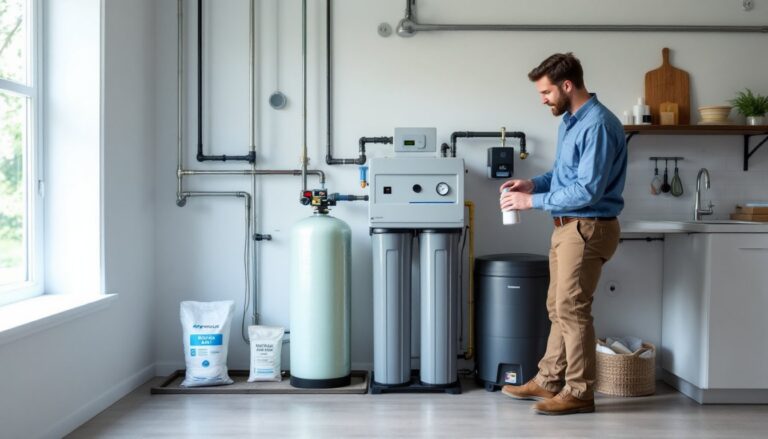
Water softeners quietly do their job, removing calcium and magnesium minerals that clog pipes, damage appliances, and reduce water heater efficiency. But like any home system, they need attention. Without regular water softener maintenance, salt bridges form, resin gets clogged, and you’re left with hard water even though a tank full of salt. The good news: maintaining a water softener isn’t complicated or expensive. A few simple checks every month and a deeper cleaning once or twice a year keep your system efficient and extend its lifespan by years. This guide walks through the maintenance tasks every homeowner can handle, the warning signs to watch for, and when to call a pro.
Table of Contents
ToggleKey Takeaways
- Regular water softener maintenance prevents salt bridges and resin clogging, keeping your system efficiently removing calcium and magnesium from hard water.
- Check salt levels every 4–6 weeks and refill with high-purity pellets when the tank drops below the midpoint to ensure consistent brine formation and regeneration cycles.
- Inspect your control valve, pre-filters, and resin tank annually for leaks, corrosion, and buildup; clogged resin and sediment are common causes of hard water breakthrough and low water pressure.
- Manual resin cleaning and regeneration cycles can resolve issues like yellow water and weak softening, but excessive salt usage or persistent problems warrant professional diagnosis from a licensed technician.
- Water softener maintenance extends resin lifespan (typically 10–15 years), protects appliances from scale damage, and reduces energy costs by preventing heating efficiency loss documented by the U.S. Department of Energy.
Why Regular Water Softener Maintenance Matters
A water softener relies on resin beads and brine (salt solution) to swap hard minerals for sodium. If that chemistry gets disrupted, clogged resin, stale brine, empty salt, the system stops working. You’ll notice it immediately: spotty dishes, dull hair, and hard buildup on fixtures resume, even though the softener runs its cycles.
Regular maintenance does three critical things. First, it keeps your system removing calcium and magnesium consistently, so water stays soft and your appliances stay protected. Second, it prevents salt bridges and mushing, crusty buildup that blocks brine formation, so regeneration cycles actually work. Third, it extends resin life. Resin beads don’t last forever (typically 10–15 years), but neglected systems force early replacement. The resin itself isn’t cheap, and a plumber’s time to swap it adds up fast.
Beyond the softener itself, consistent maintenance protects your entire home. Scale buildup in pipes restricts flow, water heaters work harder and fail sooner, and appliances like dishwashers and washing machines become inefficient. The U.S. Department of Energy notes that scale deposits reduce heating efficiency and can increase energy costs. A little prevention now saves hundreds in repairs and wasted energy later.
Essential Salt Tank Maintenance Tasks
The brine tank (or salt tank) is the heart of water softener maintenance. Salt and water mix here to create the brine that regenerates the resin. If the tank gets dirty or salt issues develop, the whole system falters.
Checking and Refilling Salt Levels
Check your salt level every 4–6 weeks. Ideally, the tank should sit about half-full. When refilling, make sure fresh salt covers any visible water, a gap between water and salt lets air in, which causes caking and reduces brine strength.
Use high-purity salt pellets or crystals, not rock salt. Rock salt contains more insoluble minerals that settle as sludge in the tank bottom. Quality pellets dissolve cleanly and reduce the grime you’ll later clean out.
Refill when the salt level drops below the midpoint or when water becomes visible on the tank floor. Most tanks hold 100–200 pounds of salt and accept standard 40-pound bags from home centers or water treatment suppliers. Refill on a schedule, don’t wait until you’re completely out, because the system won’t regenerate without brine.
Cleaning Salt Bridges and Mushing
A salt bridge is a hard, hollow crust that forms under the surface. The brine sits beneath it, unable to reach the resin. To spot one, insert a broom handle or plastic rod into the salt and give it a gentle tap. If it hits resistance and feels hollow underneath, you’ve got a bridge.
To remove it: grab a plastic rod (never metal, it can damage the tank) and carefully break up the crusty layer. Use your hands or a scoop to pull out loose salt. Don’t be aggressive: you’re trying to restore brine flow, not demolish the tank.
Salt mushing is trickier. It happens when salt dissolves, then recrystallizes into a thick, gummy paste at the tank bottom. Unlike a bridge, mushing blocks water from entering the brine well. The only reliable fix is to drain the tank completely, manually remove the mush (it’s slow work), rinse the tank, and refill with fresh salt. This is where how to clean your water softener becomes invaluable, a full cleaning also flushes sediment and disinfects the tank for long-term performance.
Inspect your tank every 1–2 years for dirt, sludge, and crusty buildup. A clean tank prevents both problems and keeps brine at full strength.
System Inspection and Filter Care
Beyond the salt tank, the control valve, resin tank, and pre-filters all need periodic attention.
The control valve sits atop your softener and manages the regeneration cycle. Check it for leaks, cracks, or visible corrosion. A slow drip from the valve isn’t normal and usually signals a worn seal or internal damage. If you’re handy, you can open the valve head and rinse internal parts in mild soapy water, then reassemble. Most valves have simple plastic components, no specialty tools needed. If it’s leaking after cleaning, the valve likely needs replacement (a job for a licensed plumber or service tech).
Your resin tank holds the beads that do the actual softening. Over time, iron, sediment, and organic buildup clog the resin. You can’t see inside, but you’ll notice: softened water becomes hard again, pressure drops, or water turns yellow. When this happens, run a resin cleaner through the brine well and trigger a manual regeneration cycle. The cleaning solution flows through the resin, flushing trapped particles. Consult your manual for the correct cleaner type and dose, different systems vary.
If your softener has a pre-filter for sediment or iron (common in well-water homes), replace or clean it as the manual recommends, typically every 3–6 months. A clogged pre-filter starves the resin tank of proper flow and accelerates resin fouling.
Once yearly, check your hardness settings using a water test kit (inexpensive at hardware stores). Compare the result to your softener’s current setting. If your household’s water use has changed, or if your municipal water hardness varies seasonally, adjust the setting. Proper calibration ensures the system regenerates only as needed, saving salt and water.
Troubleshooting Common Water Softener Problems
Even with maintenance, problems arise. Here’s how to diagnose the most common ones.
Hard Water Even though the System Running
If you’re back to spotty dishes and scale buildup, start here: Is the salt tank full and does it have a salt bridge or mush? (Check using a broom handle as described earlier.) If salt level is good, verify that salt covers any visible water. Next, confirm the bypass valve isn’t stuck in bypass mode, this valve lets you shut off the softener for maintenance, but it can get stuck. Finally, check your regeneration schedule. Some systems are set to regenerate on a timer: others, on demand. If your household water use changed (say, a new family member moved in), your old schedule might be insufficient. Run a manual regeneration, wait 24 hours, then test the water again.
Low Water Pressure or Discolored Water
Yellow or brown water usually means iron is leaking through, signaling clogged resin. Check your pre-filter first: if it’s dirty, clean or replace it. Then run a resin cleaner and manual regeneration cycle, as described in the inspection section. Low pressure can also stem from a clogged pre-filter, a leaking control valve, or mineral deposits in the resin bed itself. Resin cleaning often fixes this: if not, you may need a technician to inspect deeper.
Excessive Salt Usage
If you’re refilling salt constantly, something’s wrong. Check for leaks in the control valve or brine line (small cracks or drips under the tank). Verify your regeneration frequency, it shouldn’t be more than once or twice weekly for a typical household. If settings look right and there are no leaks, the resin is likely fouled or exhausted, and a professional cleaning or resin replacement is needed.
Many of these issues fall into DIY territory, but water softener maintenance guides and comprehensive maintenance tips offer detailed walkthroughs. For water softener repair near me or water softener maintenance near me, local water treatment companies and culligan water softener repair specialists can handle valve replacements, resin swaps, and deeper diagnostics.
Conclusion
Water softener maintenance boils down to monthly salt checks, annual deep cleanses, and quick troubleshooting when hard water sneaks back. Clean brine, healthy resin, a working control valve, and proper settings keep your system efficient for years. Tackle salt bridges and mushing early, keep pre-filters fresh, and test your water regularly. Most homeowners handle these tasks with no special tools or training. When leaks, resin fouling, or valve problems exceed your comfort level, call a local technician, but you’ve now got the knowledge to spot issues early and keep your softener running strong.