
Over time, dishwashers accumulate hard water deposits, grease, and limescale that cling to spray arms, filters, and hidden corners. These buildups don’t just cause odors, they reduce cleaning performance and can lead to cloudy dishes. Affresh dishwasher cleaner is a tablet-based product designed to break down these residues using a targeted formula that works through a standard wash cycle. Unlike all-purpose cleaners, Affresh is formulated specifically for the interior environment of a dishwasher, dissolving mineral scale and grease without damaging seals or components. This guide walks through exactly how to use it, when to schedule treatments, and how to keep the machine running efficiently between deep cleans.
Table of Contents
ToggleKey Takeaways
- Affresh dishwasher cleaner uses a slow-dissolve tablet formula to break down hard water deposits, limescale, and grease buildup that regular detergent cannot address.
- Place one Affresh tablet directly on the dishwasher tub floor and run a full normal wash cycle at the hottest temperature setting for optimal cleaning results.
- For most households, use Affresh dishwasher cleaner once monthly; hard water areas should increase frequency to every two or three weeks.
- Manually clean the filter, spray arms, and door gasket before running an Affresh cycle to ensure maximum contact with interior surfaces and improve effectiveness.
- Combine regular Affresh treatments with maintenance habits like scraping dishes, monthly filter cleaning, and weekly gasket wiping to prevent odors and maintain peak dishwasher performance.
- Look for warning signs like persistent odors, cloudy glassware, and reduced cleaning performance, which indicate the need for an extra Affresh cleaning cycle between scheduled treatments.
What Is Affresh Dishwasher Cleaner and Why Use It?
Affresh dishwasher cleaner is a slow-dissolve tablet that targets limescale, mineral deposits, and grease buildup inside the dishwasher tub, spray arms, and drain system. The active ingredients include surfactants and oxygen-based cleaners that break down organic residue and hard water scale without harsh acids that could corrode rubber gaskets or stainless steel interiors.
Most municipal water contains minerals like calcium and magnesium. Every wash cycle leaves trace deposits that accumulate on heating elements, spray nozzles, and filters. Over time, these deposits restrict water flow, reduce spray pressure, and create a breeding ground for mold and mildew. Food particles trapped in the filter or door seals add to the problem, resulting in musty odors and poor dish cleaning.
Using a dedicated dishwasher cleaner like Affresh removes buildup that regular detergent can’t address. Dishwasher detergent is formulated to clean dishes, not the machine itself. Affresh works through the entire wash system, dissolving residue in areas that are difficult to reach manually, such as the interior of the pump and spray arm jets.
The cleaner is safe for all dishwasher types, stainless steel, plastic tubs, and hybrid interiors, and won’t damage components when used as directed. It’s particularly effective in hard water areas where mineral buildup happens faster. Regular use extends the lifespan of the appliance and maintains optimal cleaning performance.
Preparing Your Dishwasher for Deep Cleaning
Before running an Affresh cycle, remove all dishes, utensils, and cookware from the dishwasher. The cleaner needs direct contact with interior surfaces, and any items left inside will block water flow and reduce effectiveness.
Inspect and clean the filter assembly at the bottom of the tub. Most dishwashers have a removable cylindrical or flat filter that twists out or lifts free. Rinse it under hot water and use a soft brush to remove trapped food particles, grease, and debris. A clogged filter restricts drainage and prevents the cleaner from circulating properly.
Check the spray arms for clogs. Remove them by unscrewing or unclipping (consult the owner’s manual if the mechanism isn’t obvious). Hold each spray arm under running water and use a toothpick or thin wire to clear any blocked nozzles. Hard water deposits often calcify inside these small openings, reducing spray coverage.
Wipe down the door gasket and edges with a damp cloth. Food residue and mold tend to collect in the folds of the rubber seal, and while Affresh will help clean some of this during the cycle, manual removal of visible gunk improves results.
Leave the detergent dispenser empty. Do not add regular dishwasher detergent or rinse aid when using Affresh. The tablet is a complete cleaning system and adding other products can interfere with its chemistry or cause excess suds.
Step-by-Step: How to Use Affresh Dishwasher Cleaner
Using Affresh is straightforward, but placement and cycle selection matter for best results.
Where to Place the Affresh Tablet
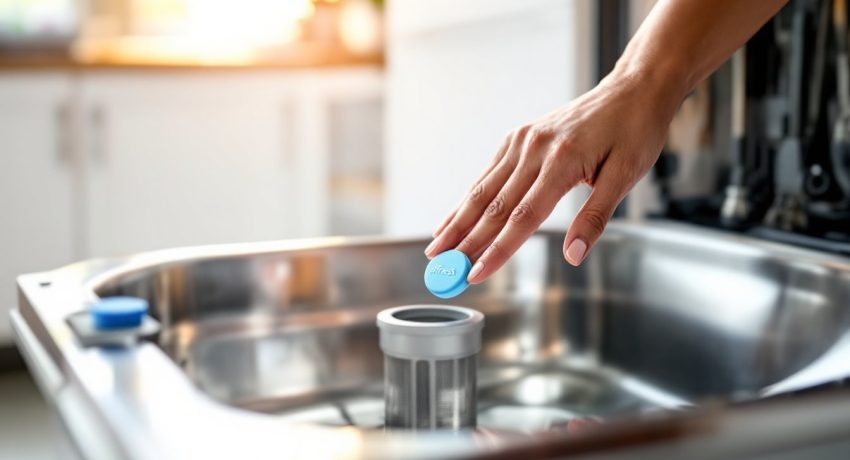
Place one tablet in the bottom of the empty dishwasher tub, not in the detergent dispenser. The tablet needs to dissolve slowly throughout the entire cycle, and placing it in the dispenser releases it too late in the wash process.
Some users place the tablet in the silverware basket or on the bottom rack, but the most effective position is directly on the tub floor, where it will be hit immediately by the spray and begin dissolving as soon as the cycle starts. If the dishwasher has a dedicated tablet holder or cleaning product compartment (found on some newer models), that’s an acceptable alternative.
Do not unwrap or crush the tablet. The outer coating controls the release rate, ensuring the cleaner works throughout the full cycle rather than dissolving all at once.
Selecting the Right Cycle and Temperature
Run a normal wash cycle with heated dry turned off. Affresh is designed to work during a full-length wash, which typically includes a pre-rinse, main wash, and rinse phases. Avoid using quick wash or rinse-only cycles, they don’t provide enough contact time for the cleaner to break down deposits.
Set the water temperature to the hottest setting available on the machine, usually between 130°F and 150°F. Higher temperatures activate the cleaning agents more effectively and help dissolve grease and limescale faster. If the dishwasher has a sanitize option, use it. The extended high-heat phase enhances the tablet’s performance.
Start the cycle and let it run to completion. The tablet will fizz and dissolve gradually, releasing cleaning agents that circulate through the spray arms, pump, and drain lines. Do not open the door mid-cycle, as this interrupts water flow and reduces effectiveness.
Once the cycle finishes, open the door and inspect the interior. The tub should look noticeably cleaner, with reduced film and a fresher smell. If heavy buildup was present, a second treatment may be necessary. For regular maintenance, one tablet per month is sufficient for most households.
How Often Should You Use Affresh Dishwasher Cleaner?
For most households, using Affresh once a month maintains a clean dishwasher and prevents heavy buildup. Frequency depends on water hardness, usage patterns, and the types of dishes being washed.
Homes with hard water, typically above 7 grains per gallon, should consider treatments every two to three weeks. Hard water accelerates mineral deposits on heating elements and spray arms, and more frequent cleaning prevents performance loss. Water hardness can be tested with inexpensive test strips available at hardware stores or through the local water utility’s annual report.
If the dishwasher runs daily or multiple times per day, monthly treatments are essential. High-frequency use means more grease, food particles, and detergent residue cycling through the system. Families with young children or those who cook at home frequently fall into this category.
For light users, households running the dishwasher two or three times per week, treatments every six to eight weeks may suffice. But, even infrequent use can lead to stagnant water odors and mildew, so skipping treatments entirely isn’t recommended.
Signs that the dishwasher needs cleaning sooner include:
- Persistent odors even after running a cycle
- Cloudy film on glassware or dishes
- Visible white or brown buildup on the interior tub or spray arms
- Reduced cleaning performance or dishes coming out dirty
- Slow drainage or standing water at the bottom of the tub
If any of these symptoms appear between scheduled treatments, run an extra Affresh cycle. Waiting too long allows buildup to harden, making it more difficult to remove and potentially requiring multiple treatments or professional service.
Tips for Maintaining a Clean Dishwasher Between Treatments
Regular Affresh treatments work best when combined with routine maintenance. A few simple habits reduce buildup and keep the dishwasher running efficiently.
Scrape dishes before loading. While modern dishwashers can handle some food residue, large chunks clog the filter and drain, creating odor and reducing water flow. A quick scrape into the trash or compost bin takes seconds and prevents most issues.
Run hot water at the sink before starting the dishwasher. This ensures the first fill cycle uses hot water rather than cold, which improves detergent performance and helps dissolve grease. Let the tap run until the water is hot to the touch, then start the machine.
Clean the filter monthly. Even with regular Affresh use, the filter traps debris that needs manual removal. Pull it out, rinse under hot water, and scrub with a soft brush. This simple step prevents most drainage problems and odors.
Wipe the door gasket and edges weekly. Use a damp cloth to remove food particles and moisture from the rubber seal. Mold and mildew grow quickly in this area, especially in humid climates or if the door stays closed between uses.
Leave the door ajar after cycles. Allowing air circulation prevents moisture buildup and reduces mold growth inside the tub. Prop the door open a few inches after the cycle finishes and the dishes are unloaded.
Use the right amount of detergent. Excess detergent leaves a film on dishes and interior surfaces, contributing to buildup. Follow the detergent manufacturer’s dosage recommendations based on water hardness and load size. Many users find that using less detergent than the package suggests still delivers clean dishes, especially with modern low-phosphate formulas. For guidance on home organization tips and other household efficiency strategies, many homeowners find value in practical lifestyle resources.
Check spray arms quarterly. Remove and rinse the spray arms, clearing any clogs with a toothpick or thin wire. Mineral deposits can block nozzles even between Affresh treatments, and clearing them manually keeps water pressure consistent.
Run a vinegar rinse between Affresh cycles. Place a cup of white vinegar in a dishwasher-safe container on the top rack and run a hot water cycle. Vinegar helps dissolve light mineral deposits and neutralizes odors. This isn’t a substitute for Affresh, which provides deeper cleaning, but it’s a useful interim step. Homeowners interested in cleaning tips often benefit from comprehensive maintenance guides.
Inspect the drain for clogs. If water pools at the bottom of the tub after a cycle, the drain may be partially blocked. Remove the filter and check the drain opening for debris. Use a flashlight to look for buildup and clear it manually if accessible.
Establishing these habits alongside regular Affresh treatments keeps the dishwasher in top condition, reduces repair costs, and ensures consistently clean dishes. Many best dishwasher cleaners offer similar benefits, but Affresh’s tablet format and controlled-release formula make it one of the most user-friendly options available.