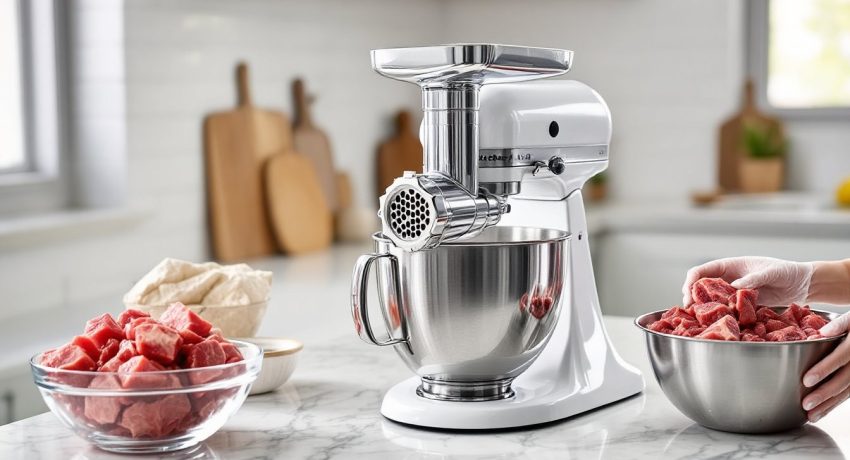

Anyone who’s spent time grinding meat at home knows the difference fresh-ground makes, better flavor, custom fat ratios, and control over what actually goes into those burgers or sausages. If you already own a KitchenAid stand mixer, you’re halfway to a home butcher setup without dropping cash on a bulky standalone grinder. The KitchenAid meat grinder attachment plugs directly into the power hub on your mixer, turning that counter staple into a grinding workhorse. It’s not just for beef: you can run pork, venison, chicken, or even firm vegetables through it. This guide walks through what the attachment does, how it stacks up against dedicated grinders, and how to use and maintain it for years of reliable service.
Table of Contents
ToggleKey Takeaways
- A KitchenAid mixer meat grinder attachment converts your existing mixer into a capable grinding station for 2–5 pounds per batch at a fraction of the cost of dedicated grinders.
- Proper meat preparation—chilling everything to 32–34°F, cutting into 1-inch pieces, and trimming excessive sinew—is critical to achieving clean, quality ground meat without smearing or clogging.
- The KitchenAid meat grinder works with beef, pork, poultry, venison, and even vegetables; adjust fat ratios (15–30% depending on meat type) and choose coarse or fine plates based on your final dish.
- Grind at mixer speed 4 (medium-low) and feed meat gradually using the stomper to prevent heat buildup and ensure consistent results.
- Immediate post-use cleaning and regular blade maintenance (replacing dull blades every few years) keep your grinder performing reliably and prevent rust and oxidation of metal components.
What Is the KitchenAid Meat Grinder Attachment?
The KitchenAid meat grinder attachment is a powered accessory that fits into the multipurpose attachment hub on the front of most KitchenAid stand mixers (tilt-head and bowl-lift models). The hub connection transfers motor power to the grinder’s worm gear, which pushes meat through a cutting plate and knife blade assembly.
The attachment includes a hopper and stomper (the plastic pusher that feeds meat safely into the grinder without fingers getting near the auger), a metal grinding worm, a stainless steel knife blade, and two grinding plates, typically a coarse plate (around 4.5 mm holes) and a fine plate (around 3 mm holes). Some models come with sausage stuffer tubes as well.
Unlike standalone electric grinders that take up dedicated counter or storage space, this attachment leverages the motor you already own. KitchenAid mixers typically run at 575 watts for tilt-head models and up to 1.3 HP for larger bowl-lift units, which is enough torque for home grinding tasks. The attachment connects with a knurled screw collar that locks it into the hub, and you control speed with the mixer’s standard speed dial.
Why Choose a KitchenAid Meat Grinder Over a Standalone Unit?
The biggest advantage is space and cost efficiency. If your kitchen already houses a KitchenAid mixer, adding the grinder attachment costs a fraction of what a quality standalone grinder runs, usually between $50 and $100, depending on the model and included accessories. Standalone grinders occupy another footprint on the counter or in a cabinet, and lower-end models often use plastic gears that strip under load.
The KitchenAid attachment uses the mixer’s all-metal gearbox, which handles continuous grinding better than budget standalone units. You can grind several pounds of meat in one session without overheating, as long as you follow proper prep (more on that below).
There are trade-offs. Dedicated grinders often have larger hoppers, faster throughput, and more robust cutting systems for high-volume processing. If you’re grinding 20+ pounds regularly or processing wild game during hunting season, a standalone unit with a size #12 or #22 head will outpace the KitchenAid. But for home use, making burgers, meatballs, sausage, or the occasional batch of ground turkey, the attachment handles it without breaking a sweat.
Another perk: the attachment is dead simple to clean compared to standalone grinders with complex motor housings and multiple electrical components. You disassemble it into a handful of parts, wash them, and you’re done. Many home cooks prefer appliances that don’t demand dedicated storage or complicated upkeep.
Key Features and What’s Included
The standard KitchenAid meat grinder attachment (model FGA) includes:
- Food tray and stomper: Sits on top of the grinder housing: the stomper is grooved to match the feed tube and keeps hands clear of the auger.
- Worm gear (auger): Metal spiral that pushes meat toward the blade.
- Knife blade: Four-sided stainless steel blade that rotates against the grinding plate to shear meat.
- Two grinding plates: Coarse and fine, each with different hole patterns. Plates are usually stamped stainless steel.
- Housing and ring cap: The main body that attaches to the mixer hub, plus a threaded ring that locks the blade and plate assembly in place.
Some versions come with sausage stuffer tubes in different diameters (small for breakfast links, large for bratwurst casings). If your kit doesn’t include them, they’re sold separately and slide onto the grinder outlet in place of the grinding plate.
The attachment is compatible with most KitchenAid stand mixers made after the mid-1990s, including the Classic, Artisan, and Professional series. Check your mixer’s model number if you have an older or specialty unit, some vintage models have a different hub size.
Weight capacity varies by mixer model, but the attachment itself can handle continuous grinding of 2-3 pounds per batch without issue. Larger mixers with higher wattage can push closer to 5 pounds before the motor needs a rest. Most appliance testing labs recommend working in batches and letting the motor cool between heavy loads to avoid wear on the mixer’s internal gears.
How to Use Your KitchenAid Meat Grinder Attachment
Proper setup and meat prep are critical. Skipping these steps leads to smearing, clogging, and a greasy mess instead of clean-ground meat.
Prep the Meat
Chill everything. Meat, grinder parts (including the worm, blade, and plates), and even the bowl that catches the ground product should be cold, around 32-34°F. Fifteen minutes in the freezer for the parts, and overnight refrigeration for the meat, works well. Meat that’s too warm smears instead of cutting cleanly, resulting in a mushy texture.
Cut meat into 1-inch cubes or strips that fit easily into the feed tube. Trim away excessive sinew, silver skin, and gristle: these can wrap around the blade and clog the grinder. Leave fat on, 15-20% fat content produces juicy burgers and sausage. For leaner grinds, you can add back pork or beef fat as needed.
Assemble the Grinder
- Slide the worm gear into the grinder housing, flat end first.
- Place the knife blade onto the worm’s square shaft, with the blade’s sharp edges facing outward toward the grinding plate.
- Position the grinding plate over the blade, aligning the notch or tab with the slot in the housing so it sits flush.
- Thread the ring cap over the assembly and hand-tighten. Don’t overtighten, the ring just needs to hold the plate snug against the blade.
- Attach the hopper and stomper to the top.
Insert the attachment into the mixer’s power hub and twist the locking collar until secure. Place a chilled bowl under the grinder outlet.
Grind the Meat
Turn the mixer to speed 4 (medium-low). Higher speeds generate heat and can cause smearing: lower speeds bog down and stall. Feed cubes into the hopper one handful at a time, using the stomper to guide them down. Don’t force or pack meat, let the worm pull it through at its own pace.
If the grinder slows or stalls, turn off the mixer, disassemble the head, and clear any sinew wrapped around the blade. Rinse parts with cold water, reassemble, and continue.
For a finer grind, run the meat through twice, using the coarse plate first and then the fine plate.
Best Practices for Grinding Different Types of Meat
Beef: Use chuck or round with at least 15% fat. Leaner cuts like sirloin can be blended with fat trimmings. For burgers, a single pass through the coarse plate gives a loose, tender texture. For meatloaf or meatballs, use the fine plate.
Pork: Shoulder (Boston butt) is ideal for sausage, around 25-30% fat keeps links moist. Trim the skin but leave fat. Grind once for coarse sausage, twice for fine.
Poultry: Chicken and turkey grind best when partially frozen, firm but not rock-hard. Poultry is lean, so add skin or pork fat for moisture. Use the fine plate to break down connective tissue. Always grind poultry on a freshly cleaned grinder to avoid cross-contamination.
Venison or wild game: Extremely lean. Blend with pork fat or beef fat at a 20-30% ratio to keep it from drying out. Double-grind with the fine plate for a uniform texture, especially in burgers.
Vegetables (for veggie burgers or fillings): Firm vegetables like mushrooms, onions, or bell peppers can be ground on the coarse plate. Blanch or sauté them first to reduce moisture, or they’ll turn to mush.
Safety note: Always use a meat thermometer when cooking ground meat. Ground beef should reach 160°F internal temperature, ground poultry 165°F, per USDA guidelines. When handling raw meat, wear disposable gloves and sanitize all surfaces with hot, soapy water or a diluted bleach solution.
Cleaning and Maintenance Tips for Long-Lasting Performance
Clean the grinder immediately after use. Meat fat and protein congeal as they cool, making cleanup exponentially harder if you wait.
Disassembly and Washing
- Turn off and unplug the mixer.
- Remove the attachment from the hub and disassemble all parts: hopper, stomper, housing, worm, blade, plate, and ring cap.
- Rinse each part under cold water first to flush away meat particles and fat.
- Wash in hot, soapy water with a brush. Pay special attention to the holes in the grinding plate and the edges of the blade. A bottle brush or toothbrush works well.
- Some parts are dishwasher-safe (check your manual), but hand-washing extends blade sharpness and prevents discoloration.
Drying and Storage
Dry all parts thoroughly with a towel to prevent rust, especially the blade and plates. Store in a dry location. Some users lightly coat the blade and plates with food-grade mineral oil before storage to prevent oxidation.
Blade Sharpness
The blade and plate work together like scissors, dull edges smear instead of cut. If you notice the grind getting mushy or taking longer, the blade may need replacement. Blades are inexpensive ($5-10) and available from KitchenAid or third-party suppliers. Plates last longer but can warp or dull with heavy use. Replace both together for best results.
Motor Care
The mixer’s motor does the heavy lifting, so don’t overwork it. If grinding more than 5 pounds in one session, let the mixer cool for 10-15 minutes between batches. According to remodeling and product sourcing guides, proper appliance care extends lifespan significantly and avoids costly repairs.
Never run the grinder dry or force oversized chunks through the feed tube. Both can damage the worm gear or strain the mixer’s gearbox.
Conclusion
The KitchenAid meat grinder attachment turns a versatile mixer into a capable grinding station without the footprint or expense of a standalone unit. Keep your meat cold, your blade sharp, and your grinder clean, and you’ll turn out restaurant-quality ground meat for years. Whether you’re prepping burgers for the grill or filling sausage casings, this attachment delivers control and quality that pre-ground supermarket meat can’t match.