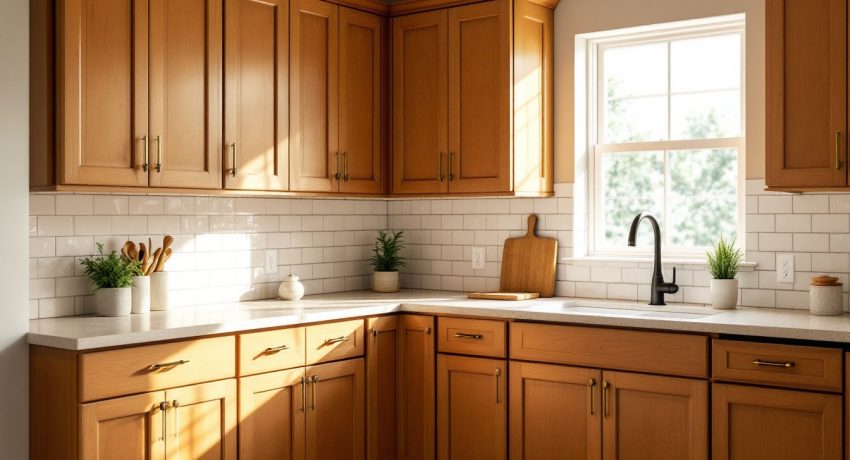

Honey oak cabinets dominated American kitchens from the 1980s through the early 2000s, warm, golden-toned wood with visible grain that promised durability and a touch of rustic charm. Fast forward to 2026, and many homeowners find themselves staring at those same cabinets, wondering whether to embrace the wood or wage war with primer and paint. The good news? You have more options than you think, and none of them require gutting your entire kitchen if you’re not ready for that expense.
Table of Contents
ToggleKey Takeaways
- Honey oak kitchen cabinets from the 1980s-2000s remain structurally sound for 30+ years and can be modernized through painting, refinishing, or design updates instead of full replacement.
- Painting honey oak cabinets requires proper prep including degreasing, sanding, and stain-blocking primer to prevent tannin bleed-through, taking 2-4 days for a typical kitchen.
- Refinishing with cooler-toned stains like gray-brown or weathered gray modernizes honey oak while preserving the natural wood aesthetic and organic appeal.
- Pairing honey oak cabinets with warm whites, greige tones, and natural materials like butcher block countertops and subway tile creates a cohesive, contemporary look.
- Updating hardware, under-cabinet lighting, and cabinet configuration costs $500–$2,500 for homeowners seeking a refresh without the $4,000–$15,000+ expense of cabinet replacement.
- Market resale value depends on regional buyer preferences—consult a local realtor before deciding whether to update or replace honey oak cabinets when selling.
What Are Honey Oak Cabinets and Why Were They So Popular?
Honey oak refers to red oak lumber finished with a golden or amber-toned stain that emphasizes the wood’s natural grain pattern. Red oak (Quercus rubra) has an open, prominent grain with a pinkish-red undertone that absorbs stain readily, making it ideal for mid-range cabinetry production.
They hit peak popularity in the late ’80s and ’90s because they checked every box for that era: affordable, mass-producible, and warm in tone, a direct rebellion against the sterile white melamine of the 1970s. Builders loved oak because it was domestically harvested, readily available, and held up well under daily wear. The honey or golden oak stain softened the wood’s red cast and gave kitchens a lived-in, country-cozy feel.
By the mid-2000s, tastes shifted toward painted cabinetry, darker espresso stains, and eventually the Scandinavian-inspired white and gray tones that still dominate design blogs. Honey oak fell out of favor not because it aged poorly, but because trends moved on. The wood itself remains structurally sound in most homes, those cabinets were built to last 30+ years, and many have.
Should You Keep, Update, or Replace Your Honey Oak Cabinets?
This decision hinges on three factors: budget, cabinet condition, and your renovation timeline.
Keep them if: the boxes, doors, and drawer fronts are solid with no water damage, the hinges and slides still function smoothly, and you’re working with a tight budget (under $3,000 for a typical 10×12 kitchen). Honey oak is making a quiet comeback in warm, organic kitchen design, especially when paired with modern hardware and neutral countertops.
Update them if: the wood is structurally sound but visually tired. Painting, refinishing, or even swapping hardware can transform the space for $500–$2,500, depending on whether you DIY or hire out. This is the sweet spot for most homeowners who want a refresh without the cost and disruption of a full remodel.
Replace them if: you’re dealing with warped doors, broken drawer boxes, outdated cabinet configurations (no soft-close, no roll-outs), or you’re planning a full kitchen gut anyway. Replacement costs vary wildly, $4,000–$15,000+ for stock-to-semi-custom cabinets in a standard kitchen, but you get to start fresh with layout and function.
One honest consideration: if you’re prepping to sell your home, consult a local realtor. In some markets, updated honey oak kitchens sell just fine. In others, buyers expect white or gray cabinetry and will lowball offers or request concessions. Regional preferences matter more than national trends.
How to Modernize Honey Oak Cabinets Without Replacing Them
Modernizing honey oak doesn’t mean erasing every trace of wood. It means making intentional updates that balance the warm tones with contemporary finishes. Here are the two most effective DIY routes.
Painting Your Honey Oak Cabinets for a Fresh Look
Painting oak cabinets is a high-impact project, but the grain telegraphs through paint unless you prep correctly. Expect to invest 2–4 full days for a standard kitchen, plus drying time between coats.
Materials you’ll need:
• TSP (trisodium phosphate) or a heavy-duty degreaser to remove cooking oils and grime
• 120- and 220-grit sandpaper or a random orbital sander
• Stain-blocking primer (oil-based like Zinsser Cover Stain or shellac-based BIN)
• Grain filler or spackle (optional, if you want a completely smooth finish)
• High-quality paint (Benjamin Moore Advance or Sherwin-Williams ProClassic in satin or semi-gloss)
• Paintbrushes, foam rollers, and a paint sprayer (optional but speeds up the process significantly)
• PPE: goggles, N95 masks (especially when sanding or using solvent-based primer), gloves
Step-by-step:
- Remove all doors and hardware. Label door backs and corresponding cabinet openings with painter’s tape and a marker, you’ll thank yourself during reinstall.
- Clean everything thoroughly. Years of cooking grease sit on those surfaces. Use TSP or a degreaser and let dry completely.
- Sand all surfaces with 120-grit. You’re not stripping the stain, just scuffing the finish so primer adheres. Wipe dust with a tack cloth.
- (Optional) Fill the grain. If you want a glassy-smooth modern finish, apply grain filler with a putty knife, let dry, then sand smooth with 220-grit. This adds time but eliminates the oak texture.
- Prime everything. Use a stain-blocking primer, water-based primers won’t prevent tannin bleed-through on oak. Apply two thin coats if you’re going from dark stain to white or light gray.
- Sand the primer lightly with 220-grit once dry.
- Apply two coats of paint. Roll or spray for speed: brush into detailed areas. Let each coat dry per manufacturer’s instructions (often 6–16 hours).
- Reinstall doors, drawers, and hardware. Consider upgrading to modern pulls or knobs, it’s a small cost ($2–$8 per pull) that amplifies the transformation.
Common mistakes: Skipping the degreasing step, using cheap brushes that leave bristle marks, or rushing the drying process. Oak is porous and needs adequate cure time, especially if you’re using water-based topcoats.
Staining and Refinishing to Enhance the Natural Wood
If the grain appeals to you but the orange tone doesn’t, refinishing with a cooler or deeper stain can modernize honey oak while keeping the wood look. This approach works beautifully in kitchens that lean into natural materials and organic textures.
Materials you’ll need:
• Chemical stripper (Citristrip is a lower-VOC option) or a heat gun
• Scrapers, steel wool, and rags
• 120-, 150-, and 220-grit sandpaper
• Wood conditioner (essential for oak to prevent blotchy stain uptake)
• Stain in your chosen tone (gray-brown, walnut, or even a weathered gray)
• Topcoat (water-based polyurethane in satin or matte holds up well and doesn’t yellow)
• PPE: chemical-resistant gloves, respirator, goggles, and adequate ventilation
Step-by-step:
- Remove doors and clean as described above.
- Strip the existing finish. Apply chemical stripper per label directions, let it work (usually 15–30 minutes), then scrape off the softened finish. Work in a well-ventilated area or outdoors. A heat gun works too but risks scorching if you’re not experienced.
- Sand progressively starting at 120-grit, moving to 150, then 220. Oak’s open grain means you’ll feel texture even after sanding, that’s normal.
- Apply wood conditioner. This step is non-negotiable with oak. Let it sit per the product instructions (typically 15 minutes), then wipe off excess. It evens out stain absorption and prevents dark splotches.
- Stain in thin coats. Apply with a rag or brush, wipe off excess after a few minutes. Test on a hidden spot first, oak can take stain darker than expected. For a modern look, consider a gray-toned or driftwood stain instead of traditional browns.
- Seal with polyurethane. Two to three coats, sanding lightly between with 220-grit, protects the wood and makes it wipeable. Water-based poly dries faster and doesn’t amber over time.
- Reinstall and upgrade hardware to complement the new finish.
Pro tip: If you love the wood but hate the color, a gray wash or whitewash technique (diluted paint or specialty wash applied over bare wood, then wiped back) can tone down the orange while keeping grain visible. It’s a middle ground between painting and traditional staining.
Best Colors and Design Choices to Complement Honey Oak
If you’re keeping the honey oak finish as-is, the right surrounding palette makes all the difference. The goal: balance the warm, golden tones without amplifying the orange or making the space feel dated.
Wall colors that work:
• Soft whites with warm undertones (Benjamin Moore White Dove, Sherwin-Williams Alabaster), they don’t clash with the yellow in the wood
• Warm grays or greiges (SW Agreeable Gray, BM Revere Pewter), they ground the space without going too cool
• Muted sage or olive greens, these are trending in 2026 and pair beautifully with natural wood
• Avoid: stark white, cool grays, or blue-grays, they make honey oak look more orange by contrast
Countertop choices:
• Granite or quartz with warm flecks (beige, cream, soft gold) ties in with the cabinets
• Butcher block or wood countertops lean into the rustic-modern aesthetic
• White or light quartz works if you paint the island or add other white elements to balance
• Avoid: jet-black counters or ultra-cool-toned materials that create harsh contrast
Backsplash ideas:
• Subway tile in warm white or cream is classic and doesn’t compete
• Natural stone (travertine, tumbled marble) echoes the organic feel
• Patterned cement tile in muted tones adds modern detail without clashing
• Avoid: bright white tile or stark geometric patterns in cool tones
Hardware upgrades:
Swapping out dated brass or wooden knobs for black matte pulls, brushed brass, or aged bronze instantly modernizes honey oak. Choose bar pulls (3.75″ or 5″ center-to-center) for drawers and simple knobs or pulls for doors. Budget $50–$150 for hardware in a typical kitchen.
Lighting and fixtures:
• Install under-cabinet LED strips to add task lighting and reduce the heaviness of the wood
• Choose pendant lights in black, brass, or natural materials (woven rattan, wood bead chandeliers)
• Swap faucets and cabinet hardware to cohesive finishes
For more design inspiration and real-world examples, browsing honey oak kitchen galleries can help you visualize how different color pairings and finishes perform in actual homes.
Conclusion
Honey oak cabinets don’t have to be a compromise or a placeholder. Whether you paint them, refinish them, or lean into the warm wood with updated surroundings, you can create a kitchen that feels current without the cost and disruption of a full cabinet replacement. The key is honest assessment of condition, realistic budgeting, and thoughtful design choices that work with the wood instead of against it.