
Hardwood floors are one of those home investments that pays dividends in beauty and durability, but only if you care for them properly. Many homeowners don’t realize that using the wrong cleaning product can gradually damage their floors, dulling the finish or causing discoloration that’s nearly impossible to reverse. That’s where pH neutral hardwood floor cleaners come in. Unlike harsh acidic or alkaline cleaners, a pH neutral formula works gently with finished hardwood, preserving both the wood and its protective coating. Whether you’ve got prefinished engineered planks or solid hardwood installed by a pro, understanding why pH balance matters and how to use the right cleaner can extend your floor’s lifespan by years. This guide walks you through everything you need to know.
Table of Contents
ToggleKey Takeaways
- pH neutral hardwood floor cleaners protect your floor’s protective coating by maintaining a neutral balance (pH 7), unlike acidic or alkaline products that can etch, dull, or weaken finishes.
- Always verify product labels for ‘pH neutral,’ ‘safe for finished hardwood,’ ‘residue-free,’ and ‘fast-drying’ specifications before choosing a cleaner for your specific floor type.
- Over-wetting is the #1 mistake with hardwood floors; use a barely damp mop and allow 15–30 minutes of drying time to prevent water from penetrating the wood and causing cupping or clouding.
- Test any pH neutral hardwood floor cleaner in a hidden area (closet or under furniture) for 24 hours before cleaning your entire home to ensure compatibility with your floor’s finish.
- Weekly vacuuming, immediate spill cleanup, felt furniture pads, and consistent use of approved cleaners are essential maintenance habits that prevent damage and extend your floor’s lifespan by years.
Why pH Neutral Matters for Hardwood Floors
Most finished hardwood floors rely on a protective coating, usually polyurethane, wax, or a penetrating oil, to resist stains, moisture, and wear. When you clean with products that are too acidic or too alkaline, you’re essentially working against that protective layer.
A pH neutral cleaner sits at around pH 7, the same neutral balance as distilled water. This matters because highly acidic cleaners (think vinegar or lemon juice) can etch or dull polyurethane finishes, while highly alkaline products can leave a whitish haze or weaken the finish over time. Manufacturers specifically formulate neutral pH cleaners to be safe for most hardwood floor finishes, fast-drying, and residue-free.
The science is straightforward: finishes are engineered to tolerate neutral conditions. Throw them off balance, and they break down. Over weeks or months of improper cleaning, that degradation becomes visible, a dull spot here, a discolored patch there. Once the finish is compromised, moisture can penetrate the wood itself, leading to cupping, warping, or mold growth. A pH neutral wood floor cleaner essentially gives your floor the gentlest clean possible while keeping the protective layer intact.
How to Choose the Right pH Neutral Cleaner for Your Floors
Not every hardwood floor is the same, and not every cleaner is right for every floor. Before you grab a bottle off the shelf, take a few minutes to match the product to your specific situation.
Start by confirming that your floors are finished (sealed). If you’ve got unfinished or unsealed hardwood, a hardwood floor cleaner, even a pH neutral one, isn’t appropriate: you’ll want to consult a refinishing pro instead. Once you’ve confirmed your floors are sealed, look for a hardwood floor cleaner that’s explicitly labeled for finished hardwood. Read the label carefully: you’re hunting for “pH neutral” or “neutral pH” language. Some products claim to be gentle but aren’t actually pH neutral, so don’t assume.
Match the product to your floor’s finish type if the label provides guidance. Polyurethane finishes, for instance, tolerate most pH neutral products well. If you have an oil-based finish or a specialty coating (like matte or satin lacquer), check the floor manufacturer’s care guide or cleaner brand’s compatibility chart. When in doubt, contact the floor maker or cleaner manufacturer, a five-minute call beats a ruined floor.
Consider performance features that matter to your household. If you’ve got kids and pets, a fast-drying formula reduces the window for spills or dirty paw prints. If you prefer plant-based options, look for biodegradable formulas. These aren’t just marketing buzzwords: they’re real differences that affect cleaning speed, ease, and environmental impact.
What to Look for on Product Labels
When you’re standing in the aisle or browsing online, these label markers tell you a product is genuinely pH neutral and hardwood-safe:
- “pH neutral” or “neutral pH”, The primary indicator you’re looking for.
- “Safe for finished hardwood floors”, Confirmation that it won’t damage polyurethane or similar coatings.
- “Residue-free”, Essential. Residue left behind attracts dirt and dulls floors over time.
- “Fast-drying”, Limits moisture exposure, which is your wood’s enemy.
- “Biodegradable” or “plant-derived”, Optional, but good for eco-conscious homeowners.
- “Do not use on unfinished or unsealed wood floors”, This warning actually reassures you the maker knows their product’s limits.
Avoid products that mention vinegar, lemon juice, or ammonia as active ingredients. Avoid anything labeled for general floors that doesn’t specifically mention hardwood. And if a label is vague (“gentle,” “natural,” “safe”) without hard specs, move on.
Step-by-Step Cleaning Process for Best Results
A pH neutral cleaner only works as well as the technique you use to apply it. Rushing through or over-wetting your floors will undo the gentleness of the product itself.
Step 1: Clear and Vacuum
Sweep or vacuum your hardwood floors thoroughly. Dust, pet hair, and grit act like sandpaper underfoot: they’ll scratch the finish if you mop over them. Use a soft-bristle broom or a vacuum with a hardwood-safe brush attachment. This one step prevents most visible damage.
Step 2: Read and Dilute
Read the cleaner’s label for dilution or application instructions. Some products are spray-ready: others need dilution with water. Follow the ratio exactly. Using more product won’t clean better, it’ll leave residue and slow drying. Using less defeats the purpose. If the label says “one part cleaner to four parts water,” measure it out.
Step 3: Apply with a Damp Mop
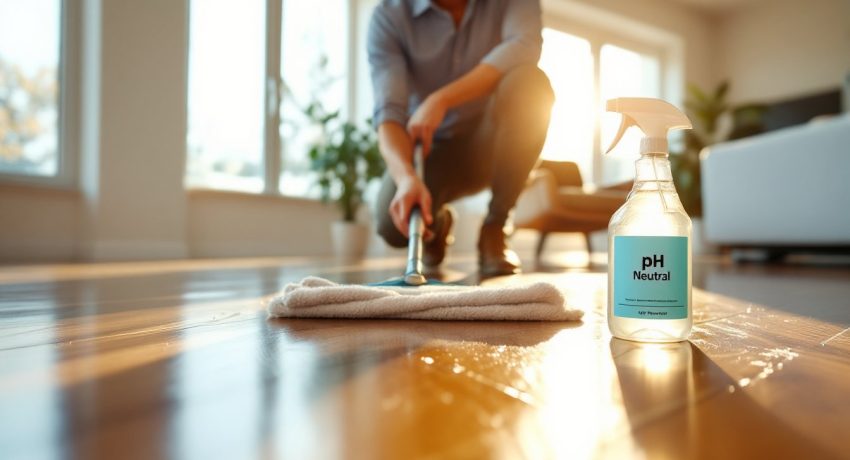
Use a microfiber mop or lightly damp cotton mop. Microfiber is ideal because it grabs dirt without leaving lint. Wring out your mop so it’s barely damp, not soaking. Excess water is hardwood’s nemesis. If you can see puddles on the floor, your mop is too wet. Spray the cleaner directly onto the mop, not the floor, this gives you better control over liquid application.
Step 4: Clean in Small Sections
Work in one room at a time, or even one section per room. Move methodically, overlapping your mop strokes slightly. Don’t let the cleaner sit on the wood while you’re working other areas: clean, move forward, and let the floor dry behind you.
Step 5: Dry Fully
Once you’ve finished a section, allow the floor to dry completely before walking on it or moving furniture back. Drying time varies by humidity and air circulation, but typically ranges from 15 to 30 minutes. Open windows, run a ceiling fan, or use a portable fan to speed things up. Some expert guides from The Spruce offer additional ventilation strategies for faster drying.
Don’t mop the entire house, then expect people to stay off it for an hour. Stage your cleaning so one room is done and dry before moving to the next.
Common Mistakes to Avoid When Using pH Neutral Cleaners
Even the best product fails when used incorrectly. Here are the pitfalls that trip up most DIYers:
Over-Wetting
This is the #1 mistake. Water penetrates wood. Microscopic gaps in the finish let moisture in, which swells the wood and can cause cupping (edges curling up) or clouding of the finish. Always use a barely damp mop, not a wet one. If your floor looks shiny from moisture, you’ve used too much.
Using on Unfinished or Unsealed Wood
If you’re not 100% sure your floors are sealed, ask yourself: do they have a sheen or shine? Can you see the natural wood grain clearly, or is there a gloss over it? If you’re unsure, test in a closet or under a bed first. Unsealed wood soaks up liquid like a sponge and will stain, warp, and eventually rot. No cleaner, pH neutral or otherwise, is safe for raw wood.
Skipping the Spot Test
Before cleaning your whole house, test the product on a hidden area: inside a closet, under the bed, or in a corner behind a door. Use it exactly as you’d use it on visible floors. Wait 24 hours and inspect. If the finish looks cloudy, changes color, or feels sticky, that product isn’t right for your floor’s finish. This ten-minute precaution can save you from ruining 1,500 square feet.
Ignoring the Label
Manufacturers test their products extensively. They know dilution ratios, drying times, and compatibility issues. Ignoring label directions because you think you know better almost always backfires. The label exists for a reason.
Using Too Much Cleaner
More cleaner doesn’t mean cleaner floors. Excess product leaves a residue film that traps dirt, dulls the finish, and makes your floor sticky. Use the recommended amount, stick to it, and resist the urge to “boost” the cleaning power.
For additional expert guidance on avoiding common mistakes, many homeowners reference Good Housekeeping’s hardwood floor cleaner guide, which includes tested products and proper application techniques.
Maintenance Tips to Keep Your Hardwood Floors Pristine
Using the right pH neutral cleaner is part of the puzzle, but long-term floor health depends on daily and weekly habits.
Dust and Vacuum Regularly
Dust mop or vacuum at least once a week, more often in high-traffic areas. This prevents grit and dirt from accumulating, which scratches the finish over time. Use a soft-bristle dust mop or a vacuum with a hardwood-safe brush setting. Skip the beater bar: it’s designed for carpet and will scratch wood.
Clean Spills Immediately
Water spills, pet accidents, and beverage splashes should be wiped up within minutes. Even a few drops left to sit can darken wood or cloud the finish. Keep a microfiber cloth handy for quick cleanup.
Use Felt Pads Under Furniture
Hard furniture legs scratch finishes constantly. Adhesive-backed felt pads cost a dollar and prevent thousands of dollars in finish damage. Replace them every year or when they wear flat.
Avoid Abrasive Scrubbers
Steel wool, scouring pads, and harsh brushes scratch even the toughest polyurethane. If you encounter a stubborn spot, use a soft cloth, light pressure, and your pH neutral cleaner. If it won’t come off, consult a pro, it’s likely a finish repair, not a cleaning issue.
Use Only Approved Cleaners
Stick to products labeled for hardwood. One-off experiments with bathroom cleaners or all-purpose sprays compromise the finish and void many floor warranties. If you’re tempted to try a homemade solution, understand that recipes like vinegar and water are acidic and will damage polyurethane over time, even though they smell natural. For safe DIY alternatives, homemade hardwood floor cleaner recipes exist, but always verify they’re pH neutral and compatible with your finish.
Think of maintenance as damage prevention rather than an extra chore. Fifteen minutes of dusting and spill cleanup per week beats thousands in refinishing costs.
Conclusion
A pH neutral hardwood floor cleaner is a straightforward investment in protecting one of your home’s most visible and durable assets. By choosing a product labeled for finished hardwood, following label directions precisely, and maintaining consistent cleaning habits, you’ll keep your floors gleaming for decades without the risk of damage that acidic or alkaline cleaners pose. The key takeaway: pH matters, technique matters, and a little preventive maintenance beats expensive refinishing every time.