
Walk across gleaming hardwood and you’ll feel the difference clean floors make. But those commercial hardwood cleaners run anywhere from $8 to $20 per bottle, and half the ingredient list reads like a chemistry exam. Making your own floor cleaner from pantry staples costs pennies per batch, lets you control exactly what touches your floors, and works just as well, sometimes better, than store-bought formulas. Plus, you’ll skip the waxy buildup some commercial products leave behind. Here’s how to mix effective, floor-safe cleaners at home and apply them without damaging your finish.
Table of Contents
ToggleKey Takeaways
- Homemade hardwood floor cleaners cost pennies per batch—using distilled white vinegar and water can save households $100 or more annually compared to commercial products.
- The two main recipes are a vinegar-based cleaner for general grime and a castile soap solution for routine cleaning, both safe for polyurethane-sealed floors when applied correctly.
- Proper application is critical: always wring out your mop thoroughly, work in sections following the grain, and never let moisture puddle, as excess water can cause boards to expand, cup, or swell.
- Test any homemade floor cleaner in an inconspicuous spot before full application, especially with engineered, shellac, or waxed floors that may react differently to moisture or mild acidity.
- Avoid common mistakes like mixing vinegar and castile soap together, using too much water or soap, mopping over dust, or applying cleaner in direct sunlight—each can damage your finish or leave streaks.
Why Choose Homemade Hardwood Floor Cleaners?
Cost savings add up fast. A gallon of distilled white vinegar runs about $3 and makes 64 batches of cleaner. Compare that to buying a new bottle of brand-name hardwood cleaner every month. Over a year, homemade solutions save most households $100 or more.
Control over ingredients matters if anyone in the house has chemical sensitivities or if pets spend time on the floor. Commercial cleaners often contain petroleum distillates, synthetic fragrances, and preservatives that can trigger reactions. Homemade formulas use food-grade or plant-based ingredients you can pronounce.
No waxy residue is another win. Many store-bought cleaners contain polymers or acrylic compounds designed to add shine, but they build up over time and attract dirt. Homemade cleaners rinse clean, leaving nothing but the original polyurethane or oil finish.
Environmental impact drops when you’re not tossing plastic bottles every few weeks. Reusing a spray bottle and mixing small batches as needed cuts packaging waste and eliminates the carbon footprint of shipping water-based products across the country.
One caveat: homemade cleaners work best on sealed hardwood, polyurethane, water-based poly, or penetrating oil finishes. If you have unfinished, waxed, or shellac floors, test any cleaner in a closet or under furniture first. Excess moisture can damage unfinished wood, and some ingredients interact with wax.
Essential Ingredients for DIY Wood Floor Cleaners
Keep these staples on hand and you can mix a fresh batch anytime.
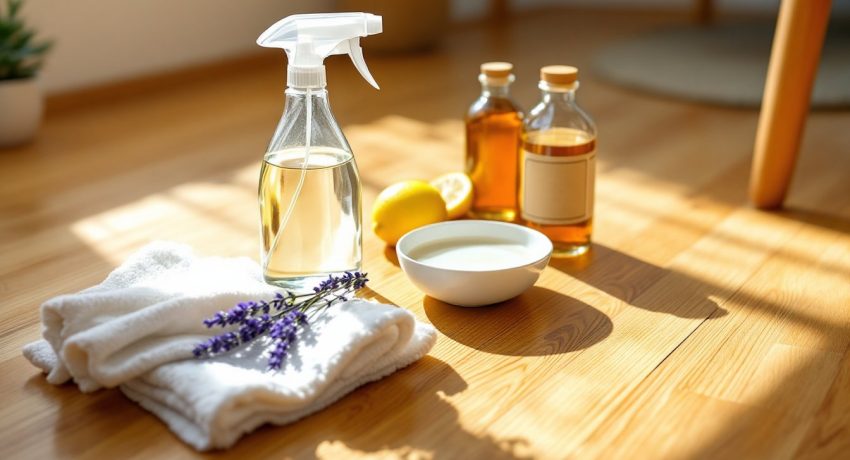
Distilled white vinegar (5% acidity) cuts grease and dissolves mineral deposits without harming polyurethane finishes. Use distilled, not apple cider vinegar, the latter can leave a sticky film.
Distilled or filtered water prevents mineral spots. Tap water in hard-water areas leaves white residue as it dries. If your municipality has soft water, tap is fine: otherwise, grab a gallon of distilled from the grocery store.
Castile soap is a plant-based liquid soap made from olive, coconut, or hemp oil. Dr. Bronner’s is the most common brand, but any unscented or lightly scented castile works. A little goes a long way, too much soap leaves streaks.
Rubbing alcohol (70% isopropyl) speeds drying and adds extra degreasing power. It’s optional but useful in kitchens where cooking oil tracks onto the floor.
Essential oils are purely optional and cosmetic. A few drops of lemon, lavender, or tea tree oil add a pleasant scent. Skip if anyone in the house is sensitive to fragrances, and never use more than 5–10 drops per gallon, oil can leave a slick residue.
Tools you’ll need:
• Spray bottle (16 oz or larger, glass or HDPE plastic)
• Microfiber mop or flat mop with washable pad
• Bucket for wringing out mop heads
• Measuring cups and spoons
• Label and marker to date your batches
Avoid string mops or sponge mops, they hold too much water and can seep into seams between floorboards.
Best Homemade Hardwood Floor Cleaner Recipes
These two formulas cover most hardwood cleaning needs. Mix them in small batches and use within a week for best results.
Vinegar-Based Hardwood Floor Cleaner
This is the workhorse formula, safe for polyurethane finishes, cuts grime, and dries fast. The 1:10 vinegar-to-water ratio is mild enough not to cloud finishes but strong enough to clean.
Ingredients:
• ½ cup distilled white vinegar
• 1 gallon warm distilled water
• 5 drops essential oil (optional)
Instructions:
- Pour vinegar into a bucket or large container.
- Add warm water and stir gently.
- Add essential oil if using, and stir again.
- Transfer to a spray bottle or leave in the bucket for mopping.
Usage notes: Spray lightly onto the floor in 4×4-foot sections and wipe immediately with a damp microfiber mop. Don’t let puddles sit, vinegar is acidic enough that prolonged contact can dull high-gloss finishes. If you notice a vinegar smell, crack a window: it dissipates as the floor dries.
Some DIYers worry that vinegar voids floor warranties. Check your flooring manufacturer’s care guidelines. Most polyurethane-sealed floors tolerate diluted vinegar fine, but a few high-end brands prohibit acidic cleaners. When in doubt, test in an inconspicuous spot and wait 24 hours.
Castile Soap Floor Cleaning Solution
This formula works well for routine cleaning tasks and adds a slight clean scent without residue. Use it when floors need more than a damp pass but aren’t heavily soiled.
Ingredients:
• 2 tablespoons liquid castile soap
• 1 gallon warm distilled water
• 1 tablespoon rubbing alcohol (optional, for faster drying)
Instructions:
- Fill a bucket with warm water.
- Add castile soap and rubbing alcohol.
- Stir gently, avoid creating suds.
- Dip your mop, wring it out thoroughly, and clean in sections.
Why it works: Castile soap lifts dirt and oils without leaving a polymer film. The alcohol evaporates quickly, reducing drying time and preventing water from soaking into seams. If you skip the alcohol, just make sure your mop is wrung nearly dry before you touch it to the floor.
Don’t over-soap. More soap doesn’t mean cleaner floors, it means sticky floors that attract dust. If you see streaks or a hazy film after mopping, you used too much. Rinse the floor with plain water and cut the soap measurement in half next time.
How to Apply Your Homemade Floor Cleaner Safely
Hardwood floors can handle moisture, briefly. The key is keeping them damp, not wet.
1. Sweep or vacuum first. Dirt and grit act like sandpaper under a mop. Use a soft-bristle broom, microfiber dust mop, or a vacuum with a hardwood floor attachment (no beater bar). Pay extra attention to high-traffic entries and under furniture legs.
2. Test your cleaner. Before mopping the whole room, spray or wipe a small patch in a corner or closet. Wait 10 minutes and check for cloudiness, discoloration, or residue. If the test spot looks good, proceed.
3. Work in sections. Spray or apply cleaner to a 4×4-foot area, then wipe immediately with a wrung-out microfiber mop. Move methodically, living room to hallway to bedrooms, so you’re not walking over wet floors.
4. Follow the grain. Mop parallel to the floorboards. It looks better and helps prevent cleaner from pooling in seams.
5. Rinse if needed. If you used castile soap or see any streaks, go over the floor once more with a mop dampened in plain water. Wring it out even more than before, this pass should barely leave moisture behind.
6. Air-dry completely. Open windows or run a fan to speed drying. Most homemade formulas dry in 5–10 minutes. Don’t replace area rugs or furniture pads until floors are fully dry, or you risk trapping moisture and discoloring the finish.
Safety and PPE: Homemade cleaners are low-hazard, but wear nitrile gloves if you have sensitive skin. Keep vinegar and castile soap away from kids and pets until floors dry, both are non-toxic but can cause stomach upset if ingested in quantity. If you’re adding rubbing alcohol, work in a ventilated space: the fumes are mild but can cause headaches in closed rooms.
Don’t use steam mops with homemade or any cleaner on hardwood. The heat and moisture can warp boards and delaminate engineered flooring. Stick to damp mopping.
Common Mistakes to Avoid When Cleaning Hardwood Floors
Even the best cleaner fails if application goes wrong. Here’s what trips up most DIYers.
Using too much water. Hardwood expands and contracts with humidity. Excess water seeps into joints, causing boards to cup or swell. Your mop should be damp enough to clean but dry enough that it doesn’t leave visible wetness. Wring it out until only a few drops come out when you twist.
Skipping the dust step. Mopping over loose dirt just pushes grit around and scratches the finish. Always sweep or vacuum first. If you have pets, do this daily in high-traffic areas.
Mixing vinegar and castile soap together. It seems logical to combine the grease-cutting power of both, but vinegar’s acidity neutralizes the soap, leaving a filmy residue. Choose one formula per cleaning session.
Not testing finishes. Not all “hardwood” floors are created equal. Some engineered floors have thin veneer that reacts poorly to moisture. Older floors may have shellac or lacquer finishes that cloud when exposed to water or alcohol. A 30-second test patch saves hours of repair work.
Leaving cleaner to sit. Vinegar and soap both need to be wiped up promptly. If you spray and walk away, you’re giving the liquid time to penetrate seams or dull the finish. Spray, wipe, move on.
Using oil-based “polish” recipes. Some home organization enthusiasts recommend adding olive oil or vegetable oil to cleaners for shine. Don’t. Oil doesn’t bond to polyurethane, it just sits on top, attracting dust and turning floors into slip hazards. If your floors look dull, they probably need a fresh coat of finish, not oil.
Ignoring manufacturer guidelines. Floor warranties often specify approved cleaners or pH ranges. If your flooring came with care instructions, read them. Most manufacturers are fine with diluted vinegar or neutral pH cleaners, but a few luxury brands void warranties if you use anything except their branded product.
Overusing essential oils. More than 10 drops per gallon leaves a residue and can make floors slippery. If you want scent, less is more. Or skip it entirely, clean hardwood smells fine on its own.
Not rinsing soap residue. Castile soap is gentle, but it’s still soap. If you don’t rinse or if you use too much, it dries to a hazy film that dulls the floor and attracts dirt. When in doubt, do a final pass with a mop dampened in plain water.
Mopping in direct sunlight. Floors dry too fast in bright sun, and cleaner can streak before you wipe it. Close blinds or clean in the evening for the best results.
Finally, remember that homemade cleaners maintain floors: they don’t restore them. If your finish is scratched, worn through, or discolored, you’re looking at a refinishing job, not a cleaning problem. Consult professional home improvement guides or a flooring contractor if you’re unsure whether your floors need cleaning or refinishing. Sanding and recoating hardwood is a bigger project, typically a multi-day job requiring a drum sander, edge sander, and proper ventilation, but it’s the only way to bring back floors that are damaged below the finish layer.